Signals of Change: Designing for a Post-Screen World at CES 2026
Discover how the trends emerging from CES 2026 are moving beyond the screen to redefine the relationship between design, technology, and the human experience.
As it does every year, CES rings in the New Year with the tech trends we don’t want to miss. However, for the design and innovation industries, CES 2026 feels different. We are witnessing a pivot away from the purely speculative toward a future where practicality and physicality are at the forefront.
The signal from CES 2026 is clear: Technology is stepping out of the screen and into our physical reality.
It’s no longer a separate layer of our lives. It is becoming a tactile material that designers can shape with the same intentionality as wood, glass, or stone.
The Signal Summary
- Physical AI: The shift from software chatbots to “embodied AI” that interacts with the material world via robotics and sensors.
- Sensorial Environments: Technology becoming a “design material,” particularly in lighting and ambient home displays.
- Zero-UI & Invisible Tech: A move toward “calm tech” that works out-of-the-box, removing the friction of apps and hubs.
- Tactile Play: The integration of high-level intelligence into physical objects, like LEGO bricks, to promote screen-free creativity.
Light as a Sculptural Material
Lighting at CES 2026 has moved far beyond the utility of the “smart bulb.” We are seeing a shift toward architectural atmosphere and what we call “Circadian Curation.”
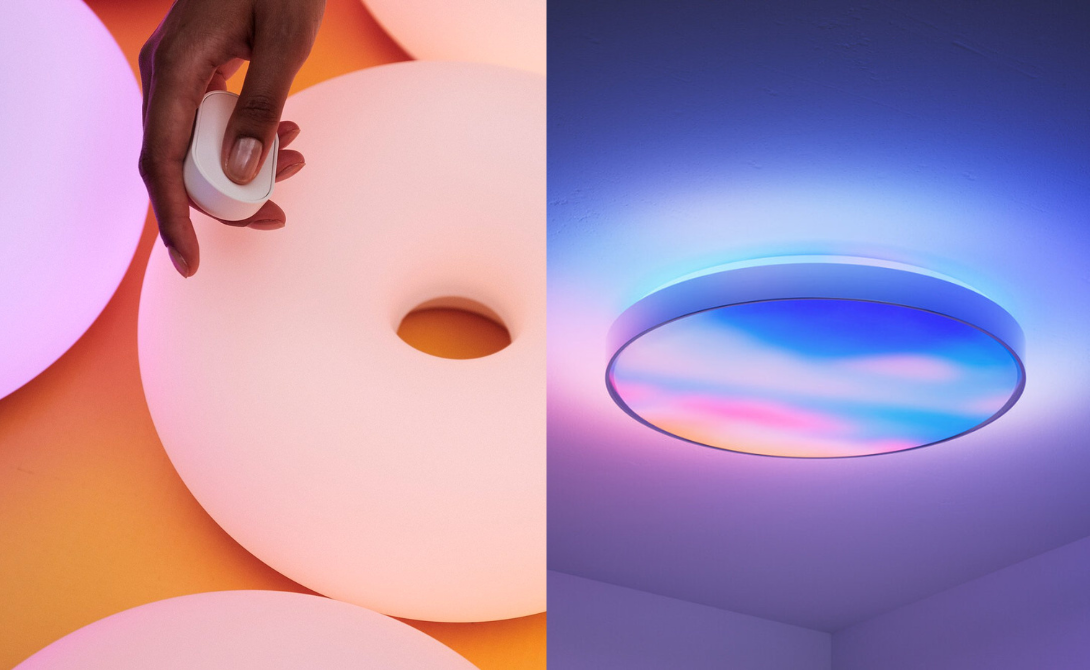
The Sabine Marcelis x IKEA collaboration (a first-time appearance at the event) is a standout signal. Marcelis has evolved the iconic VARMBLIXT donut into a Matter-enabled form that focuses on curated color-shifting transitions rather than binary on/off states. Similarly, the Govee Ceiling Light Ultra transforms the ceiling into a 616-pixel digital canvas, allowing designers to “paint” a room with light.
These products suggest a future where light is treated as a mood-altering substance, used by designers to reset a room’s biological and emotional state without a single screen in sight.
The Rise of Physical AI
For years, AI has been a ghost in the machine—an invisible force behind our screens. CES 2026 marks the year AI officially grew a “body.” This trend of physical AI is about using intelligence to solve the friction of the material world.
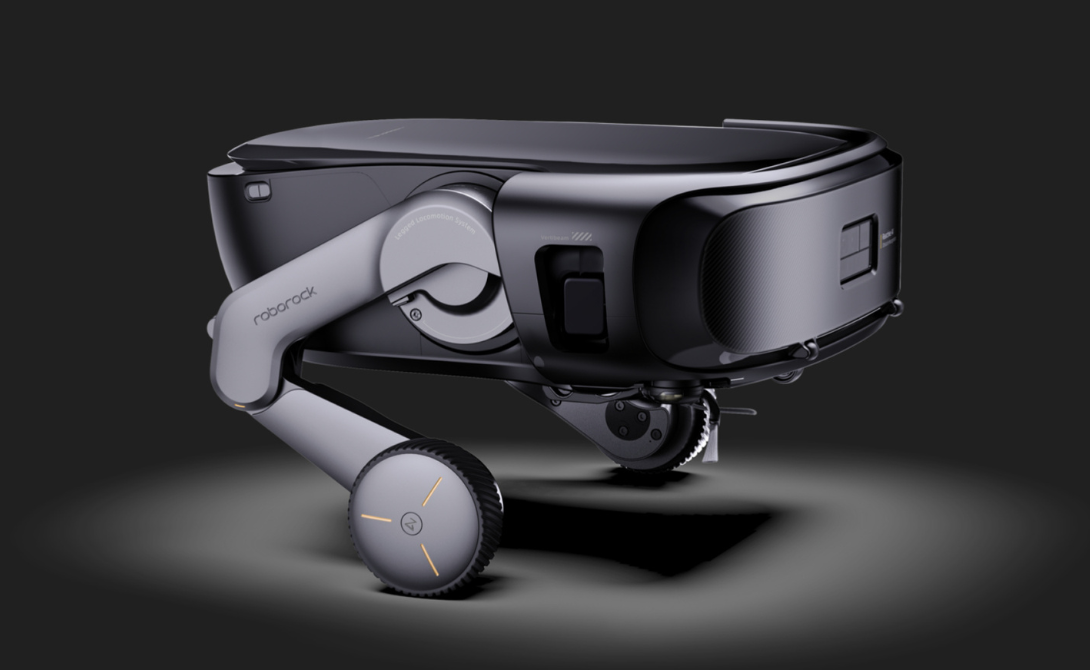
While humanoid factory workers grabbed headlines, the real innovation lay in more intimate applications. The Roborock Saros Rover vacuum is the perfect example; it has sprouted articulated wheel-legs that allow it to climb steps and navigate obstacles with animal-like fluidity.
For the design industry, it signals a move where the “user interface” is no longer a menu on a screen, but the physical movement and behaviour of the object itself.
Tactile Play and Invisible Tech
Perhaps the most refreshing signal is the “digital detox” movement—where high-level tech is hidden inside tactile, familiar objects to encourage screenless interactivity.
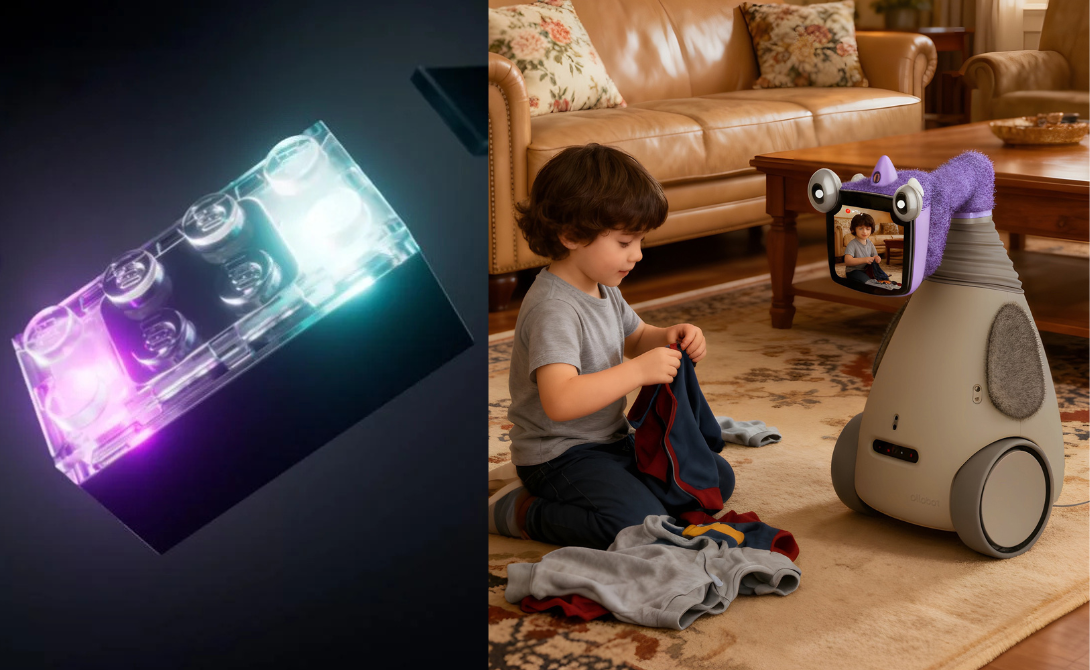
In a first for CES, LEGO introduced its Smart Play system. These bricks contain internal sensors and 3D-spatial recognition, allowing builds to “react” to each other without losing the classic tactile joy of the click. Similarly, OlloNi, a cyber-pet designed for the home, uses an interactive screen only for emotive “eye contact.” Created by TDC client Swift Creatives, it blends Scandinavian simplicity with high-tech empathy, proving that purposeful design isn’t about making noise, but about creating comfort.
Elsewhere, the “Smart Home” is becoming the “Invisible Home.” From Lutron’s new smart blinds that reduce energy bills by tracking the sun’s path, to Ring sensors that work out of the box without hubs or Wi-Fi, the goal is zero-UI. If a user has to open an app to make a product work, the design hasn’t finished its job yet.
Designing for the Whole Human
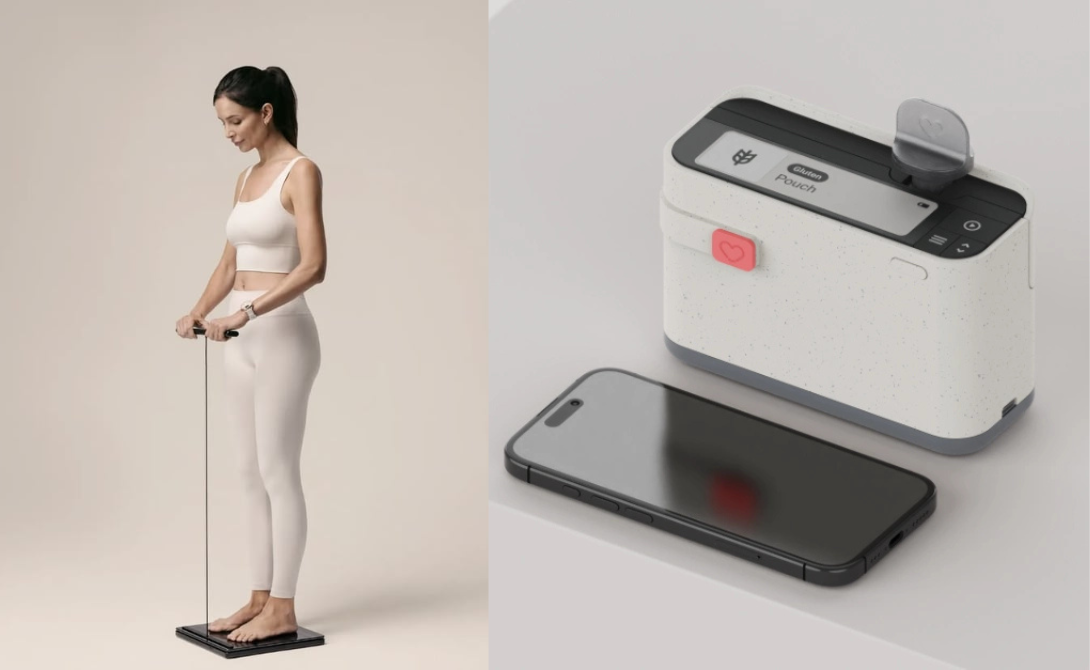
Finally, the health and wellness sector at CES 2026 shows a move toward holistic at-home body-scanning. From portable allergen tests and Garmin’s integrated nutrition tracking to the latest Withings body scanners, tech is becoming a proactive partner in our well-being.
Across the design industry, the pattern is clear: the most successful innovations of 2026 are those that embrace change as a constant, breaking down the silos between “tech” and “lifestyle.” The products we’ve seen aren’t just gadgets; they are tools for living better, designed with a conscience and an empathy for the real world.
CES 2026 has officially signalled a shift from “speculative tech” to applied innovation. For the design and creative industries, the takeaway isn’t just about faster chips; it’s about how technology is finally becoming a “material” that designers can shape with the same tactile intentionality as any other medium.
At TDC PR, we have the privilege of working with some of the most progressive brands and agencies in the business—from Seymourpowell, Swift Creatives, and Morrama to Panasonic Design, AutoStore and more. These are studios that don’t just observe tech; they shape it into something meaningful.
What signals of change are you seeing from CES this year? Join the conversation and share your insights.