Signals of Change: The Debranding of the 2026 FIFA World Cup
Unpack the 3 core strategic marketing principles from 2026 FIFA World Cup. Discover how debranding, agility, and asset equity defeated traditional official sponsorships.
For decades, the math of global sports marketing was simple: if you wanted to own the cultural narrative of a tournament, you bought the official sponsorship rights.
The conclusion of the 2026 FIFA World Cup marked the end of that absolute monopoly. While official sponsors paid massive fees to secure perimeter boards, the brands that captured the highest cultural equity operated from the sidelines. By leveraging strict venue rules, real-time digital banter, and distinctive visual identities, unaccredited brands turned restrictions into their primary creative advantage.
We witnessed the emergence of The Unofficial—a paradigm shift where “clean site” enforcement policies designed to protect paid partners inadvertently triggered the most valuable earned-media activations in sports history.
The Iron-Fist Paradox
Under FIFA’s strict “clean stadium” guidelines, host venues were systematically stripped of non-sponsor commercial identity. Stadiums dropped their corporate naming rights for generic regional titles, logos were systematically covered, and vendor packaging was masked.
In a social-first environment, this heavy-handed suppression produced an unintended reaction: the more aggressively a brand was hidden, the more attention was drawn to its identity.
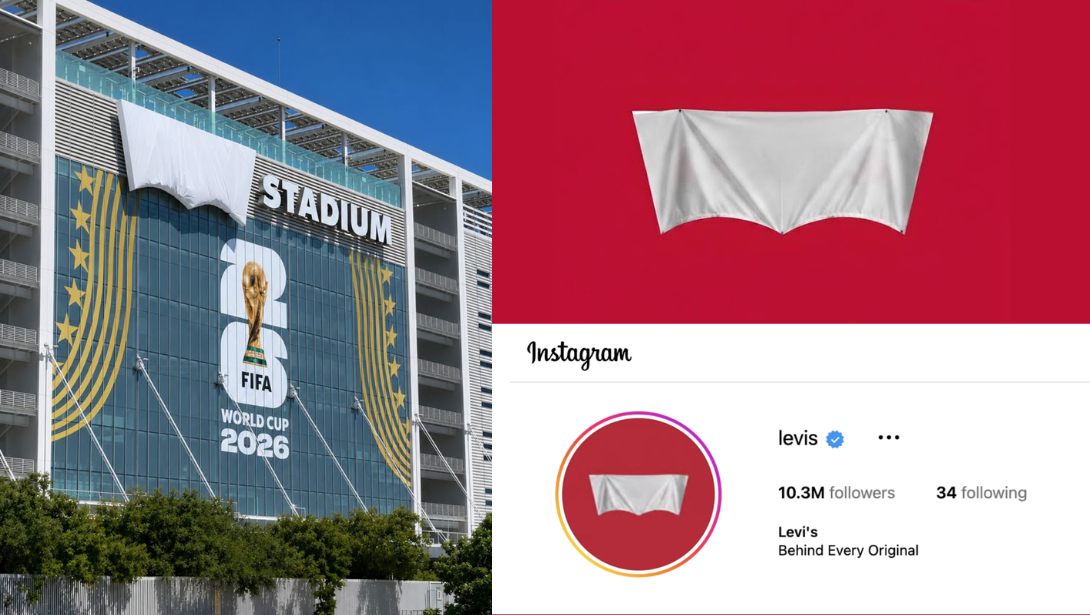
- Levi’s and the Batwing Hijack: When FIFA mandated the removal of non-sponsor branding at Levi’s Stadium, the company covered its massive exterior logo with a tight white canvas. Although the lettering was hidden, the distinctive double-arched Batwing outline remained instantly recognisable beneath the fabric. Levi’s capitalised on the moment by changing its social avatar to the covered mark, posting TikTok’s set to the viral “Nobody’s gonna know…” audio, and captioning it: “Welcoming the world to the beautiful [redacted] stadium!”. They even duplicated the “censored” tarp-style aesthetic across flagship retail storefronts in London, Paris, and Mexico City, turning a localised restriction into a global, multi-channel campaign.
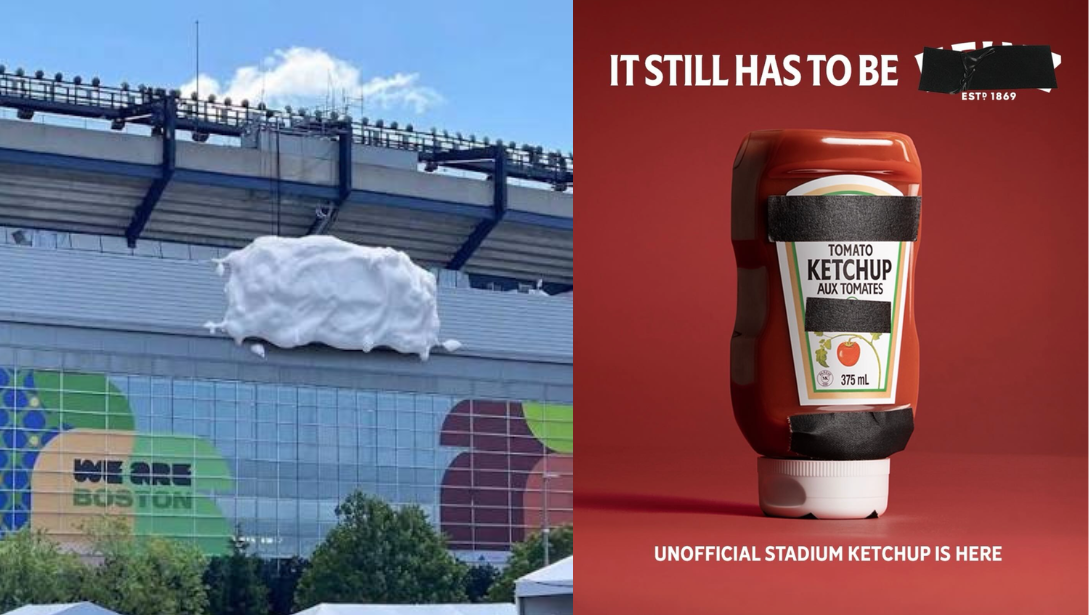
- Gillette’s Foam Cover-Up: At “Boston Stadium” (traditionally Gillette Stadium), the brand was required to obscure its naming-rights signage. Gillette responded in the digital space by circulating a graphic of its stadium logo submerged under a mountain of computer-generated shaving cream, accompanied by the note: “At least we got to choose how we cover it.” The humour turned a compliance mandate into an organic social victory.
- Heinz’s “Unofficial” Product Line: Inside media and concession zones, staff applied black tape over non-sponsor condiment containers. Heinz immediately mirrored the censorship in stores by introducing “Unofficial Football Ketchup”—featuring a pre-printed black stripe printed over its own label—alongside “Penalty Packets” shaped like yellow and red referee cards that invited fans to penalise bland food online.
Real-Time Wagers & Cultural Agility
Away from physical venues, the most resonant brand moments bypassed traditional media buys entirely, relying instead on speed, human tone, and live tournament drama.
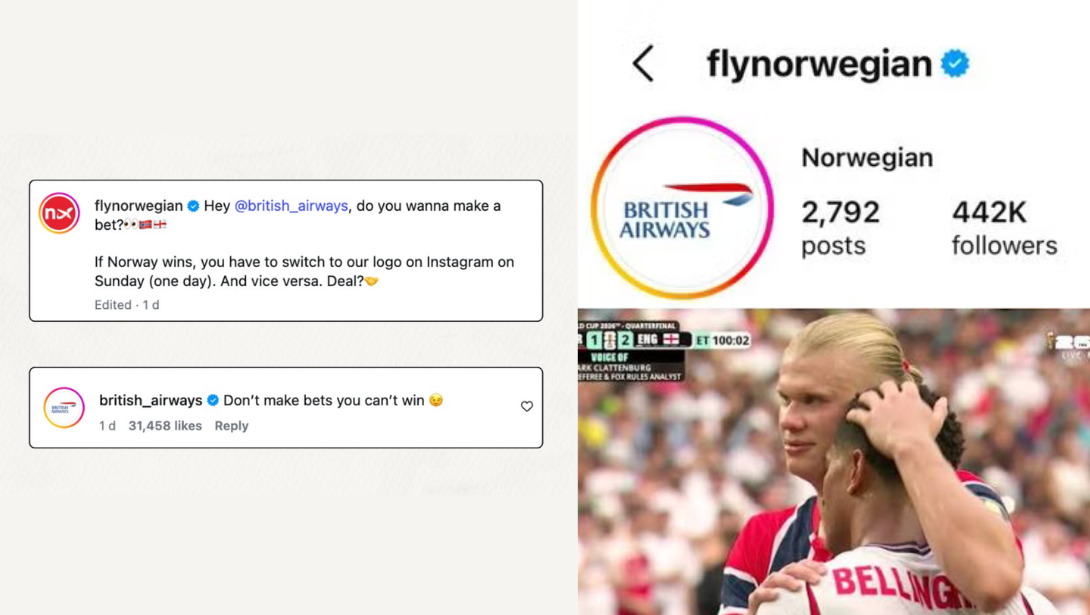
- The Airline Logo Wager: Ahead of the quarter-final match between England and Norway, Norwegian Air and British Airways engaged in a viral Instagram wager. The stakes? Whichever country’s team lost, that airline had to change its social media profile picture to the winner’s logo for 24 hours. After England defeated Norway 2-1 in extra time, Norwegian Air honoured the bet, swapping its signature red tail icon for the British Airways crest and captioning it: “While the tournament is over for us, this friendly bet will live forever in our hearts… hope you’ll get to bring football home!”
- The exchange—playing off national team stars Jude Bellingham and Erling Haaland—garnered millions of organic impressions and universal praise for transforming commercial rivalry into human-centric, shareable content. Norwegian Air even capped off the stunt with a flash sale on flights to England, proving that real-time sports banter can convert directly into commercial footfall.
IP in Plain Sight
This shift toward active cultural participation was equally visible in how sportswear giants and elite athletes deployed their personal platforms directly on the field.
Introducing “Signals of Change”
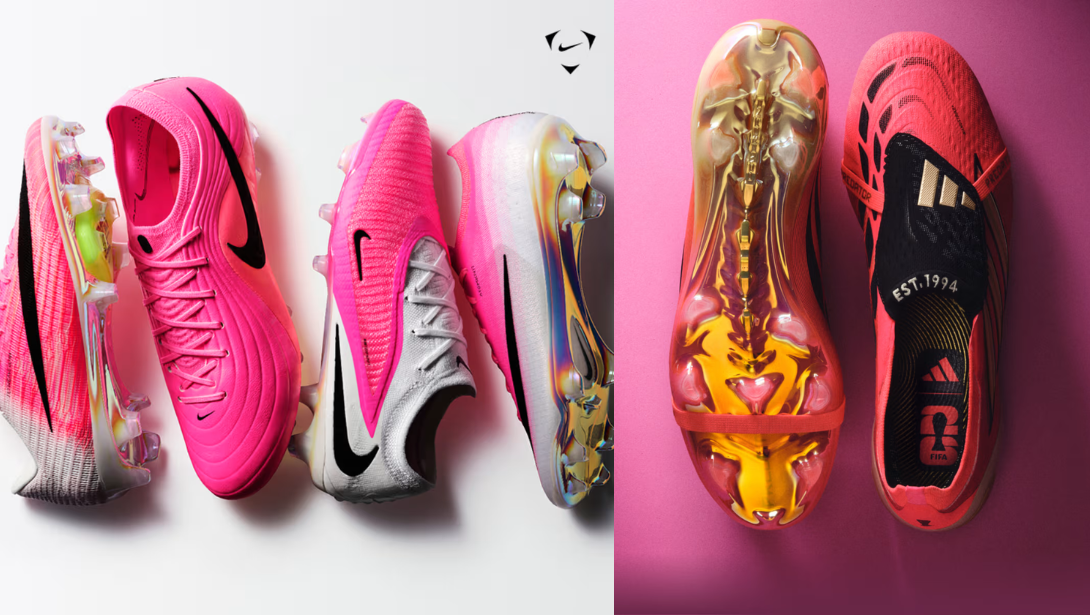
- The High-Contrast Footwear Battle: The sea of neon-pink boots worn across the tournament was a calculated visual hack by brands like Nike and Adidas. Knowing that traditional LED perimeter hoardings often get lost in broadcast glare, brands engineered footwear specifically to contrast against a bright green pitch. Nike outfitted marquee stars like Kylian Mbappé in its neon-pink “Breakout Pack” Mercurials, while Adidas placed its “Road to Glory” Predators on key talent like Jude Bellingham. These vibrant colourways proved that embedding brand IP onto moving athletes generates far higher visual recall than traditional stadium signage, while subtly challenging football’s traditional associations with masculinity to create one of the tournament’s most talked-about cultural statements.
- Erling Haaland’s On-Pitch Commercialisation: Off the pitch, the lines between athlete, influencer, and brand ambassador continued to blur. Norway’s Erling Haaland provided a prime example when he competed wearing a red hairband inspired by the Norwegian flag. What appeared to be a simple functional accessory was actually a direct-to-consumer activation: Haaland was wearing his own line of co-branded Knekki hair accessories, turning a high-profile knockout match into a live storefront that operated completely outside official tournament licensing.
What This Means for Brands
The 2026 FIFA World Cup demonstrated that strict commercial boundaries can no longer contain brand influence. For future cultural and sports marketing strategies, three core principles emerge:
- Trade Name-Recognition for Asset Equity: Levi’s illustrated that if you spend decades building a truly distinct shape, silhouette, or visual asset—like the Batwing shape—you don’t need your name on the sign. Strong brands survive being censored because their visual DNA is already baked into culture.
- Lean Into the Friction: Rather than resisting regulatory constraints behind closed doors, brands like Gillette, Heinz, and Levi’s proved that acknowledging restrictions with self-awareness and making them part of the joke generates far more consumer intimacy than a standard, multi-million-pound billboard.
- Be Human in the Feed: The Norwegian Air x British Airways exchange highlights an increasing fatigue toward rigid, over-engineered corporate messaging. Participating in real-time cultural moments with humour—or in their case, a friendly rivalry—creates a level of brand relevance that traditional sponsorship deals struggle to match.
In 2026, the brands that made the biggest impact were not those with the largest sponsorship budgets, but those who realised that a strict restriction is simply the world’s best creative brief.