The Next Generation of Kid’s Technology
From screen-free phones to tactile AI toys, discover five innovative kids' tech designs putting physical interaction, creativity and play ahead of endless scrolling.
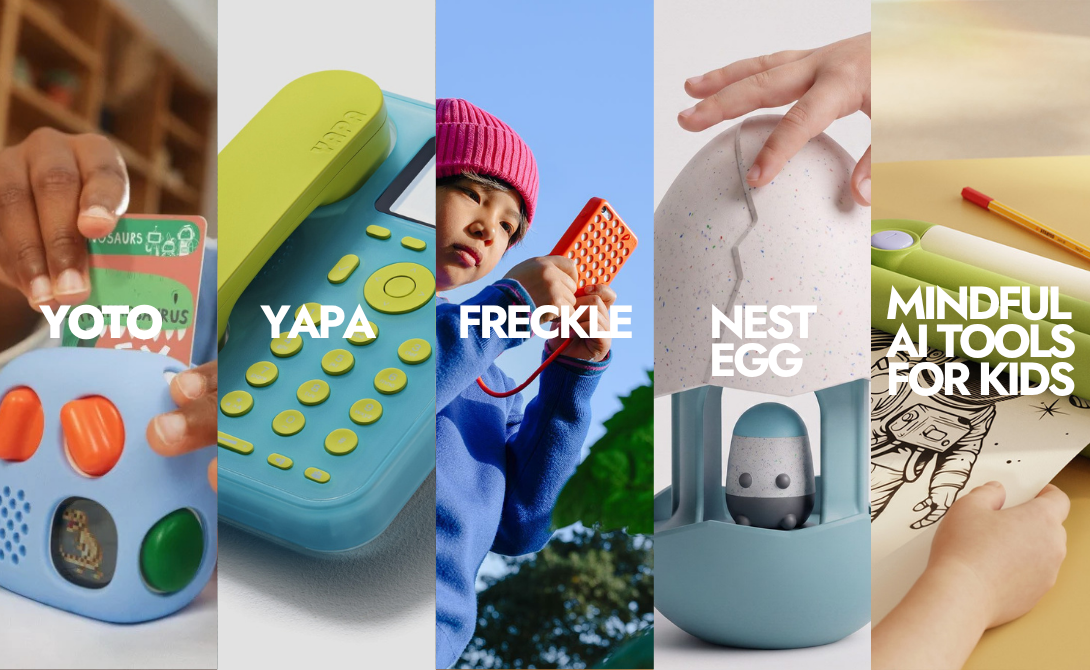
Is tactility the feature?
The pre-Christmas run of kids’ tech has begun, and this year’s launches share something unusual: they’re designed to be turned, pressed and held, not swiped.
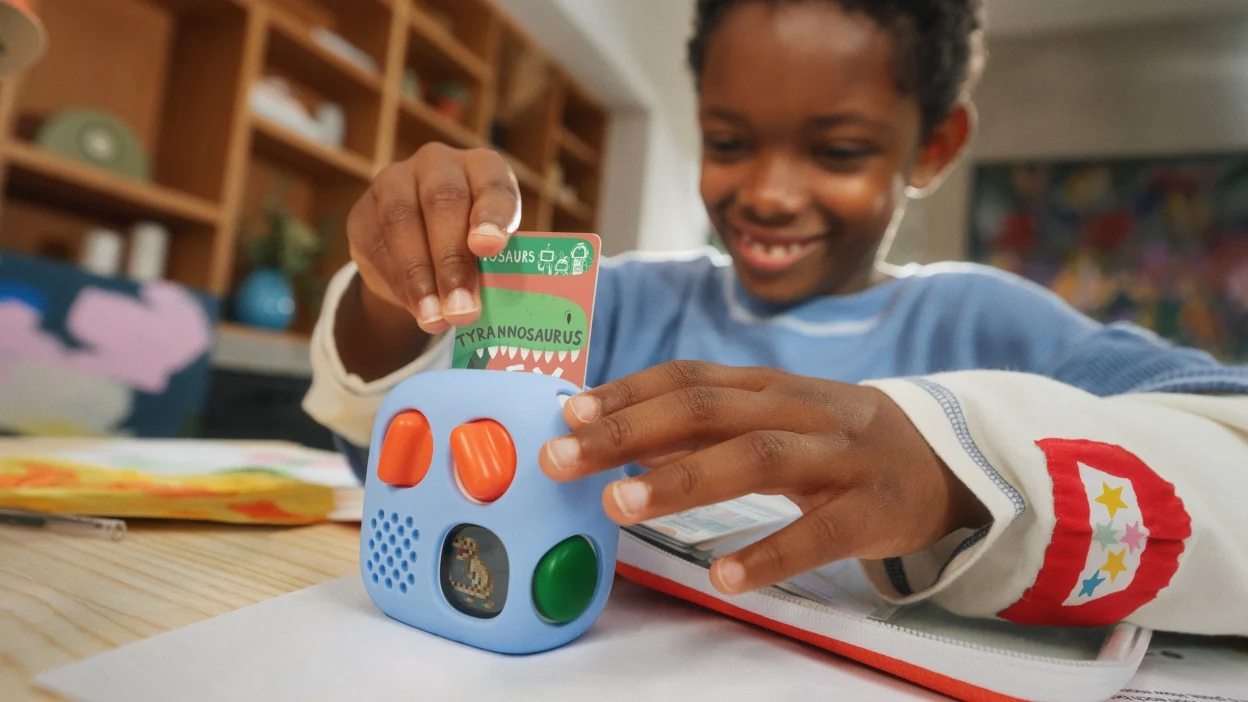
Yoto’s fourth-generation Player, designed by Heirloom, adds a navigation wheel instead of a bigger display. Jack Godfrey Wood, Designer & Heirloom Founder, describes it as: “a menu, not a screen”.
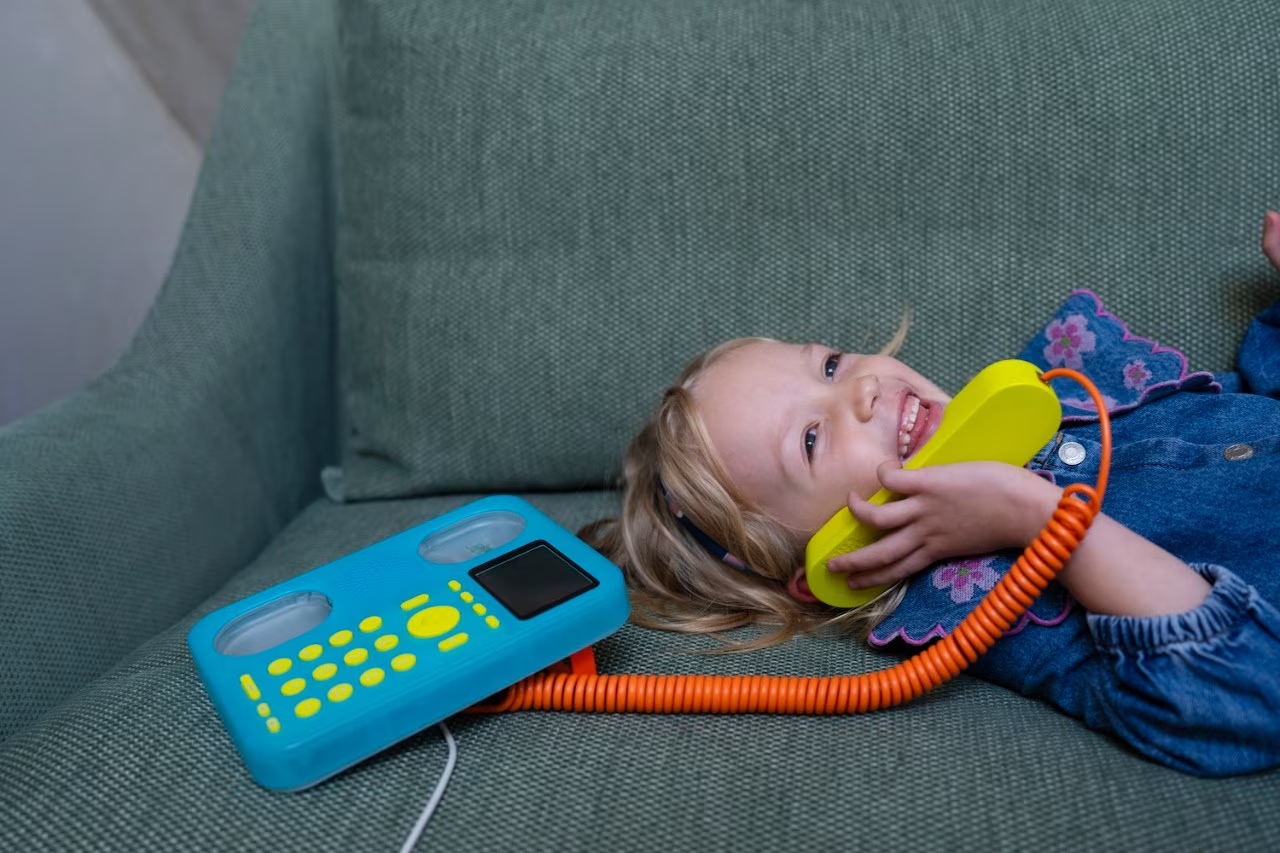
YAPA, which we have been working on with Aetha, brings the home phone back for five- to fourteen-year-olds. Wi-Fi calling, contacts approved by a parent, swappable covers, nothing to scroll. Aetha founder Tom Parsons wants it to be something children are “excited to tell their friends they use”.

Freckle, with industrial design by Body Shop, has designed a device with a screen that runs on AI, but it hangs from a lanyard like a pair of binoculars and its quests only work outdoors. “It’s built to send a kid outside instead of keeping them inside and online.” says founder and CEO Sam Terris.
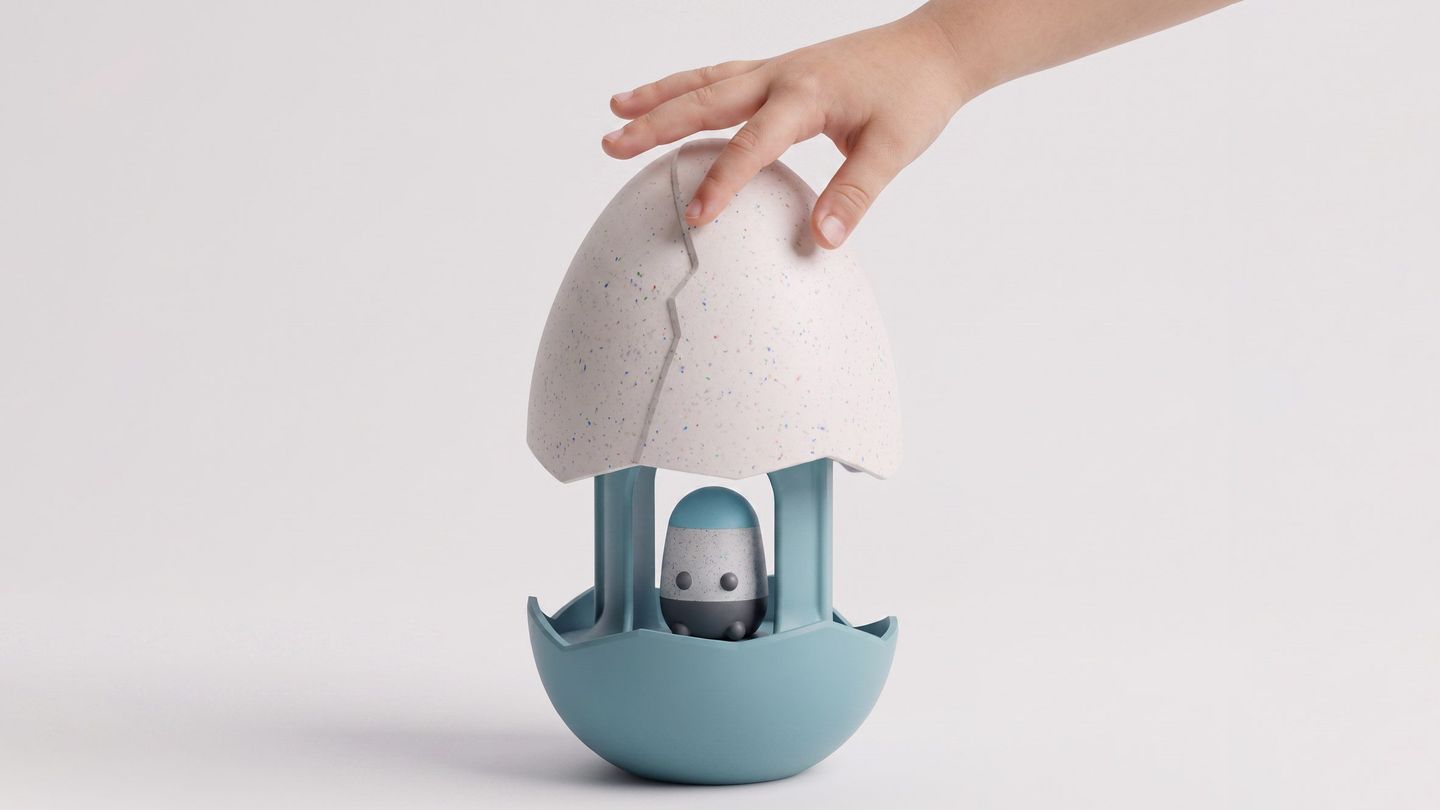
Filament‘s Nest Egg makes money physical again. A toy egg cracks open once a child has earned enough stars, and the character inside taps against a parent’s phone to release their allowance. Co-founder Craig Lynn says digital payments have cost children “that piggy bank smash moment”.
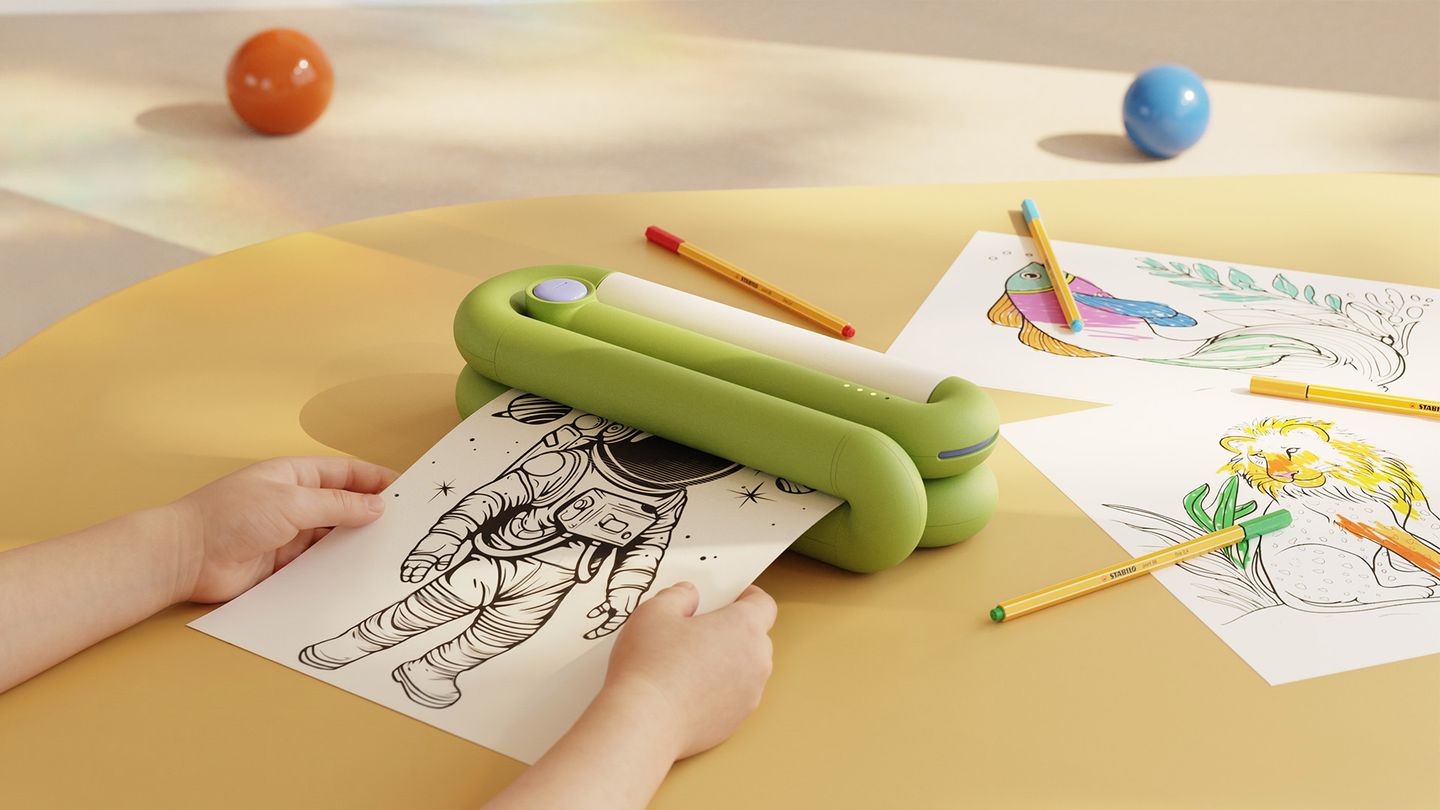
Recently exhibited at Hebei International Industrial Design Week, Morrama‘s Mindful AI concepts for children aged six and up are built around touch: Calm is squeezed like a fidget toy, Connect responds through touch-sensitive petals, and Create turns a child’s spoken prompt into a line drawing to colour in. Founder Jo Barnard accepts that some will question putting more powerful technology in children’s hands, but the “support, creativity and communication that AI enabled objects such as these could bring to the children of tomorrow is boundless and exciting”.
Find out more about our work with Morrama.
Each one puts something physical in a child’s hands in place of endless content.
Emerging technologies are usually sold on what they take away: buttons, weight, effort. These put them back.
Is tactility now what parents are paying for? And as AI moves into children’s products, should we meet it through objects, not screens?